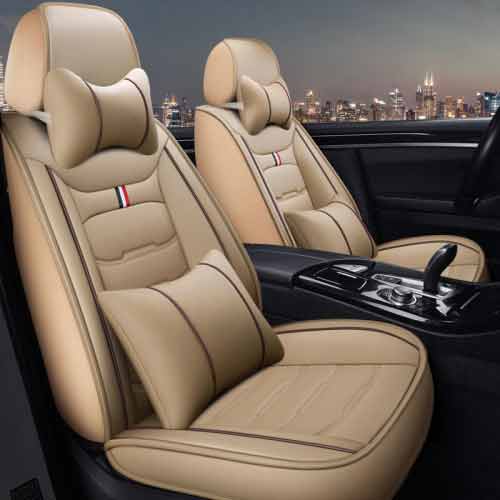
Product details description
Car seat covers are essential accessories for protecting vehicle seats from
wear, stains, spills, and UV damage, while also enhancing the interior
aesthetic. When selecting car seat covers, the primary decision is between
universal fit and custom fit options, each with distinct advantages and
limitations related to sizing, fit, and functionality. A comprehensive sizing
guide is critical to ensuring that the chosen seat covers not only fit properly
but also maintain the functionality of seat features such as airbags, seatbelts,
and adjustable headrests. Understanding the key differences in sizing and fit
between universal and custom seat covers helps vehicle owners make an informed
decision based on their needs and budget.
Universal car seat covers are designed to fit a wide range of vehicle makes
and models, leveraging a one-size-fits-most design that accommodates standard
seat dimensions. These covers typically feature elastic edges, adjustable
straps, and Velcro fasteners to adapt to different seat shapes and sizes, making
them a versatile and cost-effective option. The sizing for universal covers is
based on general seat categories, such as bucket seats, bench seats, or
split-bench seats, with measurements ranging from 18-22 inches for bucket seat
backrests and 45-55 inches for bench seat widths. While universal covers are
easy to install and widely available, their loose fit can lead to wrinkling,
shifting during use, and potential interference with seat controls.
Custom fit car seat covers are tailored specifically to the exact
dimensions of a vehicle’s seats, created using precise measurements of the make,
model, and year of the vehicle. Unlike universal covers, custom fit options are
designed to follow the contours of the seats closely, providing a snug,
factory-like fit that eliminates wrinkling and shifting. The sizing process for
custom covers involves detailed measurements of seat back height and width, seat
cushion length and width, headrest dimensions, and the location of cutouts for
airbags and seat controls. This precision ensures that all seat features remain
fully functional, and the covers blend seamlessly with the vehicle’s interior
design.
To determine the correct size for either universal or custom fit seat
covers, vehicle owners should follow a systematic sizing process. First,
identify the seat type (bucket, bench, split-bench) and measure key dimensions:
seat back height (from top of headrest to bottom of seat back), seat back width
(across the widest point), seat cushion length (from front edge to back of
cushion), and seat cushion width (across the widest point). For universal
covers, compare these measurements to the manufacturer’s size chart to ensure
compatibility. For custom covers, provide the vehicle’s make, model, and year to
the manufacturer, as they will use pre-existing precise measurements for that
specific vehicle. Additionally, note any special features such as integrated
seat heaters, airbags, or adjustable lumbar support, as these may require
specific cutouts or design modifications.
The choice between universal and custom fit seat covers ultimately depends
on the vehicle owner’s priorities. Universal covers are ideal for those seeking
affordability, versatility, and easy installation, especially if they own
multiple vehicles or plan to sell the vehicle in the future. Custom fit covers
are better suited for those prioritizing a precise fit, optimal functionality,
and a polished appearance, willing to invest more for long-term durability and
performance. By following the appropriate sizing guide and considering their
specific needs, vehicle owners can select seat covers that provide effective
protection, maintain seat functionality, and enhance the overall look of their
vehicle’s interior.
Previous article:
Economical Car Seat Covers
Next article:no more